One hour.
Your quick wins.
The numbers behind each one.
An AI readiness assessment for small and mid-sized businesses. We spend an hour on how your business actually runs, then hand you the tools that fix it — mostly inexpensive, off-the-shelf tools you’ve never heard of, already proven in businesses like yours.

Three ways businesses arrive here
All three end in the same place: a ranked list of what to do, what it costs, and what it returns.
“We think we’re falling behind.”
A competitor quotes faster, answers faster, or sells to accounts you never saw. You can’t tell how much of that is AI. We map your workflow against what is genuinely being automated in your sector and tell you which gaps are real and which are noise.
“We know we’re inefficient.”
Hours disappear into copy-paste between systems, chasing follow-ups, re-keying the same order into three places. You know it’s happening; you don’t know what it’s worth. We put hours and euros on each one.
“We have an idea.”
You know what you want the tool to do. You don’t know whether it’s a weekend of plumbing between two systems you already pay for, or a six-month build. We scope it honestly and tell you which — including when the answer is “buy this, don’t build”.
Sixty minutes on your business — then the answers
The hour is not a product demo. It’s spent understanding how the work really happens and what the friction costs you. The tools come afterwards, in the handover — researched against your situation rather than pulled off the shelf while you watch. The call runs inside the Ortuni portal with screen sharing, and it’s recorded, so the report is built from what we actually saw.
Context
What the business does, where the margin actually comes from, and what you already measure.
Workflow teardown
You share your screen and walk through the work as it really happens — the spreadsheets, the inbox, the workaround nobody documented.
Putting a number on it
Each friction point costed in hours per week and euros per month, with your own figures, so the ranking that follows argues from evidence.
Constraints & priorities
What you already pay for, what can’t leave the building, who would actually run a new tool, and which pain you want solved first.
Between the two meetings we do the research: which of the thousands of tools now on the market fit your workflow, your budget and your constraints. At the handover meeting we walk you through the report, the shortlist and the maths — and that is where you decide what you’ll switch on yourself and what you’d rather hand to someone else.
Both meetings includedWhere the value is
Every idea from the hour lands in one of four boxes. Your report concentrates on one of them — the top-left — because that is the only quadrant that pays for itself before your enthusiasm runs out.
The rest isn’t thrown away. Major projects are phased, fill-ins are parked, and the bottom-right is named so nobody sells it to you later.
High impact, low effort. Itemised one by one, with the tool, the cost and the setup time. How many there are depends on what we find.
High impact, high effort. Phased in after the wins have paid for them.
Low impact, low effort. Worth doing when someone has a slow afternoon.
Low impact, high effort. Named explicitly, so they stop coming back.
A nine-part report, walked through with you at the handover
In your hands within three working days, written so a non-technical operator can act on it on Monday and a technical one can check the maths.
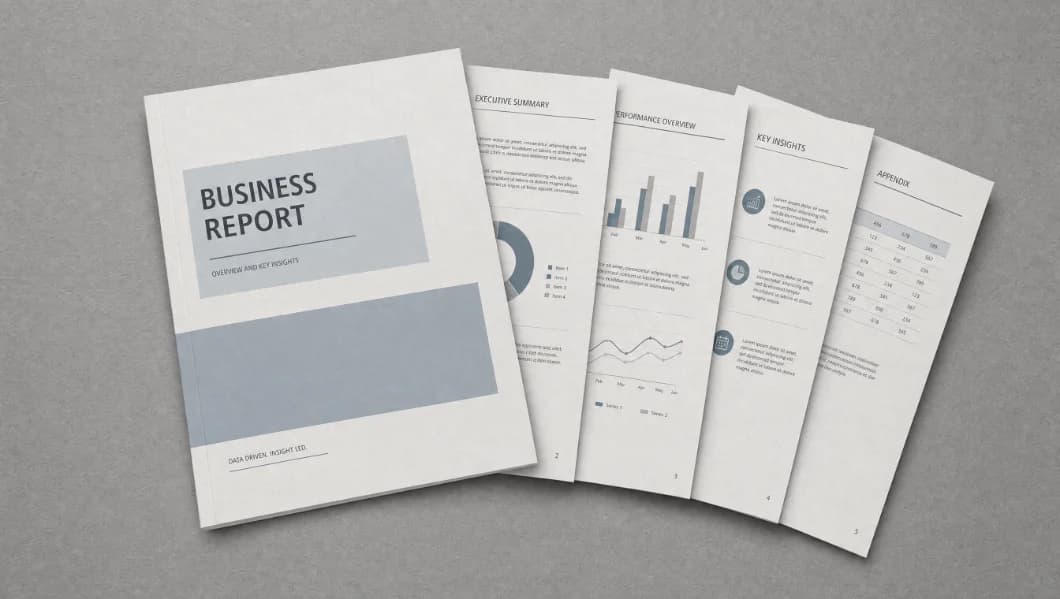
Executive summary
The pain, the outcome, and the hours you can reclaim every week — on one page.
Impact–effort matrix
Every option we discussed, plotted — including the ones we advise against.
Your quick wins
However many we find: high impact, low effort, each with the change it makes and who owns it.
Recommended solutions
Per tool: monthly cost, setup time, and the hours it saves.
Four-day plan
Day one to day four. Named tool, named owner, done by Thursday.
What comes after
The bigger moves, sequenced, so the quick wins fund the next phase.
Financial impact
Monthly net ROI, weekly time returned, total tool cost. Assumptions shown.
Next steps
What you do yourself, and what is worth handing to someone else.
Handover meeting & review call
We present the report live, argue the shortlist with you, and follow up once you’ve run the four-day plan.
Covers both meetings and the report. No retainer, no reselling, no commission on any tool we name — and no obligation to use our people to set any of it up.
We built the hard version. That’s why we can tell you to buy the cheap one.
There are thousands of tools on the market now that do, for tens of euros a month, what used to take a custom build. Most of your quick wins will be exactly that — something inexpensive, already proven, that nobody has ever put in front of you. Knowing which one, and what it takes to get it working, is the assessment.
The reason we can judge them is that we have built these systems from scratch in these eight areas. So if the thing you need genuinely doesn’t exist off the shelf, we’ve already been there too — and we’ll tell you plainly which of the two you’re looking at.
Lead enrichment
Firmographic and contact pipelines that keep a CRM current without hiring a data team.
CRM & ERP automation
Quote to order to invoice, with the manual handoffs and the double entry removed.
Automated outreach
Sequenced campaigns written from real account context, not merge tags and hope.
Follow-up & email drafting
Drafts that carry the whole thread’s history, queued for a human to approve and send.
Private LLMs
Models running inside your own boundary, on your documents, with nothing leaving the building.
Marketplace & client mapping
Matching messy supply to messy demand: catalogues, taxonomies and duplicate resolution.
Document & data extraction
Invoices, specs, orders and PDFs turned into structured records your systems can read.
Internal copilots
Assistants that answer from your own procedures, pricing and history — not the open web.
Ortuni is a new company; the build experience behind it isn’t. We don’t sell these systems from this page — they’re the reason our reading of the market is worth paying for. We publish anonymised case notes as clients approve them, and we won’t put numbers here we can’t show the working for.
The people who run your assessment have their own way in
Ortuni means opportunity, and it has to work in both directions: the practitioners who do this work get paid projects and a public record of what they have shipped, and people with expertise in an entirely different field get a route into it. Both have their own pages — and their own way to join.
Rated on what you’ve shipped, not on a CV
Hourly-paid projects with businesses that already know what they want built. Run assessments on the platform, and take the implementation work that comes out of them.
For consultantsAI on its own gets you nowhere. Attached to a field you know, it makes you rare.
Approved on the expertise you already have, trained and mentored, graded on real work, then offered paid tasks at a trainee rate.
For traineesThe questions we get asked before people sign up
Is this just a sales call for consulting?
No — and it isn’t a pitch for our own software either. Most of what we recommend is somebody else’s tool, bought for a few tens of euros a month, and several of the quick wins are things your own team can switch on in an afternoon. If you’d rather someone else set them up, our consultants quote for that separately, and you are free to take the report elsewhere.
We already use AI. Is there anything here for us?
Usually yes, and the assessment changes shape: instead of “where do we start”, it becomes “are we using this where the money actually is”. Scattered subscriptions and one enthusiastic department are the two most common patterns we see.
Who needs to be on the call?
Two people at most: someone who knows how the work really gets done, and someone who can approve spending a few hundred euros a month on tooling. More than three and the hour goes on discussion instead of evidence.
What if you don’t find anything worth doing?
Then the report says so, with the reasoning, and names what would have to change for it to be worth revisiting. It’s rare — but it is considerably cheaper than discovering it over six months and a failed pilot.
What happens to our data?
The session recording and the report live in your account in the Ortuni portal, visible to you and to the consultant who ran it. Where a recommendation touches sensitive material, we scope it as a private model inside your own boundary rather than a public service.
Start with an account, not a sales call.
Registering takes a minute and costs nothing. Inside the portal you get the full assessment brief — what the hour covers, who runs it, what the report looks like — and you decide from there whether to pay the fee and pick a slot.
Once you book, the portal asks you a short set of follow-up questions about how the business runs. Our AI reads the answers and briefs your consultant beforehand — so the hour starts where a normal first meeting would end.
Client account
No payment now, and no newsletter. You’ll get portal access by email within one working day.
Register
Name, work email, company. Nothing else, and no card.
Read the full brief
Inside the portal: how the assessment works, a sample report, the people who run it, the terms.
Pay and pick a slot
Settle the fee and take one of the slots your consultant has open. Reschedule freely up to 24 hours before.
AI-guided intake
A short adaptive questionnaire about your systems, volumes and bottlenecks — it asks follow-ups based on your answers, and briefs the consultant before you meet.